
Unlock glossary for repair, buyback and wireless shops
Forty-five short definitions, in the order a device meets them: identity, lock, qualification, condition, the organisations and the money. Where a term has an authoritative source it is linked; where the meaning is trade usage we say so.
Last reviewed 2026-10-28. Written for shops by STACKS. Not affiliated with any carrier.
Identity
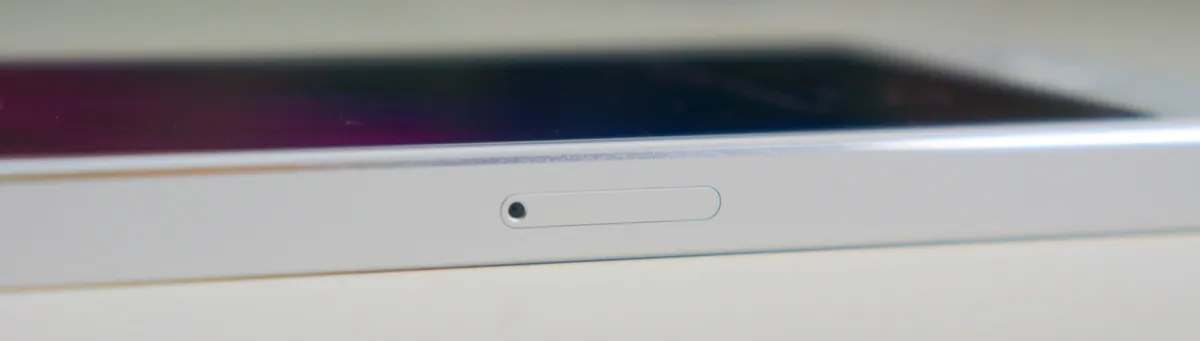
IMEI (International Mobile Equipment Identity). The 15 digit serial number of a cellular device, printed on the SIM tray or box and shown by dialing *#06#. Carriers lock, unlock and blacklist by IMEI, which is why every unlock service asks for it and nothing else.
MEID and ESN. Older device identifiers used on CDMA networks. The CTIA checker and GSMA Device Check accept an IMEI, MEID or ESN (source).
TAC (Type Allocation Code). The first eight digits of the IMEI, which identify the make and model. It is how a checker knows an IMEI belongs to an iPhone 15 before it looks anything up.
Dual SIM / eSIM. A phone that holds two subscriptions, physically or as a downloaded eSIM profile. Each slot has the same IMEI based lock; an eSIM only phone sold by a carrier is locked exactly like one with a tray. AT&T lists separate status steps for prepaid eSIM devices (source).
The lock
SIM lock, carrier lock, network lock, subsidy lock. Four names for one thing: software in the phone that refuses SIMs from other networks until the carrier clears it. T-Mobile's support page notes the term "may also be known as SIM unlock, network unlock, or carrier unlock" (source). Verizon defines unlocking as "disabling the software that prevents a device designed for one carrier from being activated on another" (source).
Permanent unlock. The normal outcome of a carrier policy unlock: the lock is removed for good. Samsung and Pixel menus literally offer "Permanent Unlock" (source); Verizon promises it "will never re-lock" an unlocked device (source).
Temporary unlock. An unlock for a limited period, typically for international travel. Boost notes a device already unlocked this way will not be auto unlocked again at the one year mark (source).
NCK (Network Control Key) / unlock code. The numeric code that older phones, hotspots and some tablets accept to remove the lock. T-Mobile still issues codes for hotspots and some tablets (source). Modern iPhones and most Androids are unlocked server side instead.
Remote unlock / OTA unlock. The carrier flips the lock from its side; the phone picks it up over the air or after a restart. T-Mobile and Boost unlock qualifying devices remotely within two business days (source; source).
Device Unlock app. The preinstalled app on older T-Mobile and Metro Android phones that talks to the carrier server and applies a permanent unlock; Metro warns that rooting the device disables it (source).
Carrier Lock (iPhone setting). The line under Settings > General > About. "No SIM restrictions" means unlocked; "SIM locked" means locked (source).
Carrier policy unlock. Trade usage for an unlock performed through the carrier's own qualification route, delivering the same result the account holder would get. The opposite of a bypass.
Bypass. Any method that makes a locked or blocked device work without the carrier clearing it. Reversible by the carrier, and the IMEI is often blocked afterwards.
Qualification
Qualifies to unlock. The device meets every condition of its carrier's policy. At T-Mobile postpaid that is 40 days active on the requesting line and paid in full; prepaid 365 days, or more than $100 in refills per line and more than 14 days (source). At AT&T it is 60 or more days, a zero installment balance, no lost, stolen or fraud report and no past due bill (source).
Days active. Days the device has been in service on the carrier's network on that line, not days since purchase. Cricket counts "365 days of paid service on that device" (source); Straight Talk is reported to pause the count during inactive periods.
Postpaid. Billed monthly after service is provided. The FCC order quotes this definition and notes postpaid devices unlock after the contract or financing is fulfilled (source).
Prepaid. Paid in advance. Under the CTIA code prepaid devices unlock "no later than one year after initial activation" (source), which is why so many brands sit at 365 days.
Paid in full / paid off. No balance remains on the device's installment plan, lease or payment agreement. Required by every national carrier before unlocking (source).
Financed. A balance is still owed on the device. Locked until paid, and at risk of a later blacklist if the owner stops paying. See financed and blacklisted.
Refill threshold. T-Mobile prepaid's shortcut: more than $100 in refills per active line lets a device qualify before 365 days (source).
Unlock limit. T-Mobile allows no more than 2 prepaid unlocks per line in 12 months (source).
Military exception. Every national carrier unlocks early for deployed personnel in good standing on proof of deployment, a CTIA commitment (source).
Account holder. The person whose carrier account the device sits on. Only they can trigger the carrier's free unlock, which is why a trade-in with no account holder present needs a wholesale unlock.
Condition
Clean. Trade usage: not blacklisted, not reported lost or stolen, no unpaid balance or fraud flag, no Activation Lock or MDM. The condition every legitimate unlock requires.
Blacklisted / blocked. The IMEI is on a carrier block list and, usually, the GSMA block list, which covers "lost, stolen, faulty, broken and fraudulently obtained mobile devices" (source). Independent of the carrier lock.
Lost or stolen report. The owner's report to their carrier, which blocks the IMEI. Verizon keeps such devices locked "until they are cleared from the lost or stolen report" (source).
Unpaid bills / past due. The account rather than the device owes money. AT&T will not unlock while a current customer's bill is past due (source).
Fraud flag. The carrier believes the device or account was obtained fraudulently. T-Mobile may deny any request it believes is "an effort to defraud the company" (source).
Activation Lock. Apple's anti theft feature, on whenever Find My is on, which requires the owner's Apple Account password before anyone can erase, reactivate or use the device (source). Not affected by a carrier unlock.
Find My. The Apple service that enables Activation Lock and Lost Mode. Apple's advice to buyers: do not take ownership of a used iPhone that shows "iPhone Locked to Owner" (source).
FRP (Factory Reset Protection). Android's equivalent: after a reset the phone asks for the previous Google account. Trade usage; Google documents it under device protection.
MDM (Mobile Device Management). Corporate enrolment that lets an employer control a device. Apple notes Activation Lock behaves differently for MDM enrolled devices (source). An MDM locked phone belongs to the company, not the seller.
Activation error. An iPhone that will not activate with another carrier's SIM is usually still locked; Apple's guidance says a SIM "not compatible" error means contact the carrier (source).
The organisations and the law
CTIA. The US wireless industry association. It adopted six unlocking commitments into its Consumer Code for Wireless Service on February 11, 2014 (source) and runs the Stolen Phone Checker (source).
CTIA Consumer Code unlocking commitments. Publish the policy; unlock postpaid after contract or financing; unlock prepaid within a year; notify or auto unlock when it qualifies; respond within two business days; unlock for deployed military (source).
GSMA. The global operator association, more than 750 operators, that runs the Device Registry and block lists (source).
GSMA Device Check. The paid lookup service for businesses, and the engine behind CTIA's free consumer checker (source).
FCC. The US regulator. Its Wireless Telecommunications Bureau waived Verizon's 60 day unlock rule on January 12, 2026 in Order DA 26-43 (source).
Unlocking Consumer Choice and Wireless Competition Act. Public Law 113-144, approved August 1, 2014, which restored the legal exemption for consumers to unlock their phones (source).
Section 1201 exemption. The copyright rule, renewed every three years, that permits circumvention of "computer programs that enable wireless devices to connect to a wireless telecommunications network" when done "solely in order to connect" and "such connection is authorized by the operator of such network" (source). The legal basis for carrier policy unlocks, and the reason bypasses fall outside it.
The money
Trade-in gap. The difference between what an unlocked and a locked unit of the same phone fetches. Swappa measured 25 to 57 percent on trade-in quotes and about 5 percent on asking prices on October 1, 2026 (source). See locked vs unlocked value.
Net gain. Trade-in gap minus unlock cost minus carrying cost. The number that decides whether to unlock.
Chargeback. A card issuer reversing a payment at the cardholder's request. On a financed phone a chargeback or non-payment can lead the carrier to blacklist the IMEI after the device has changed hands.
Wallet / prepaid balance. Funds held on account with an unlock desk and drawn per order. Ours is funded by approved shops only; see how approval works.
Problem window. Trade usage: the period after delivery during which a failed or reversed unlock is handled under the provider's guarantee. Ours is stated on each quote before you confirm.
Last reviewed 2026-10-28.
Questions shops ask
What is the difference between a carrier lock and a blacklist?
A carrier lock is software in the phone that refuses SIMs from other networks; it is removed by an unlock. A blacklist is an entry against the phone's IMEI in carrier and GSMA databases that stops it registering on networks at all; an unlock does not touch it.
What does clean mean when buying a used phone?
Clean means the IMEI is not blacklisted, not reported lost or stolen, carries no unpaid balance or fraud flag, and the device is free of Activation Lock or MDM. In practice shops verify as much of this as they can with the CTIA checker, the carrier's status check and the device screen.
What does qualifies to unlock mean?
The device meets every condition in its carrier's unlocking policy, for example 40 days active and paid in full at T-Mobile postpaid, 60 days and a zero installment balance at AT&T, or 365 days of paid service on most prepaid brands. Qualifying devices are unlocked free by the carrier, automatically or on request.
Is an eSIM phone still carrier locked?
It can be. The lock is applied to the device, not to a physical card, so an eSIM only iPhone sold by a carrier is locked in exactly the same way and unlocked by the same process.
Sources
- T-Mobile SIM Unlock Policy, accessed 2026-10-28
- AT&T Support: Unlock your AT&T phone or device (KM1008728), accessed 2026-10-28
- Verizon Support: Device Unlocking Policies, accessed 2026-10-28
- Boost Mobile Unlocking Policy, accessed 2026-10-28
- FCC Wireless Telecommunications Bureau, Order DA 26-43 (Jan 12, 2026), accessed 2026-10-28
- GSMA Block List Services Description (PDF), accessed 2026-10-28
- CTIA Stolen Phone Checker, accessed 2026-10-28
- Apple Support: Activation Lock for iPhone and iPad, accessed 2026-10-28
- Apple Support: If you can't activate your iPhone or iPad, accessed 2026-10-28
- Swappa Blog: Unlocked vs Carrier-Locked: Resale Value Impact (Oct 1, 2026), accessed 2026-10-28
- govinfo: Public Law 113-144, Unlocking Consumer Choice and Wireless Competition Act, accessed 2026-10-28
- Cornell LII: 37 CFR 201.40 (section 1201 exemptions), accessed 2026-10-28
- T-Mobile support: device unlock steps, accessed 2026-10-28
Last reviewed 2026-10-28. Policies change; the carrier page is the only authority for its policy. Carrier policy is reference: the services we sell are the ones listed above, as The STACKS App sells them.
RELATED Carrier policies Locked vs unlocked value Financed and blacklisted